 LaCleo
The short answer
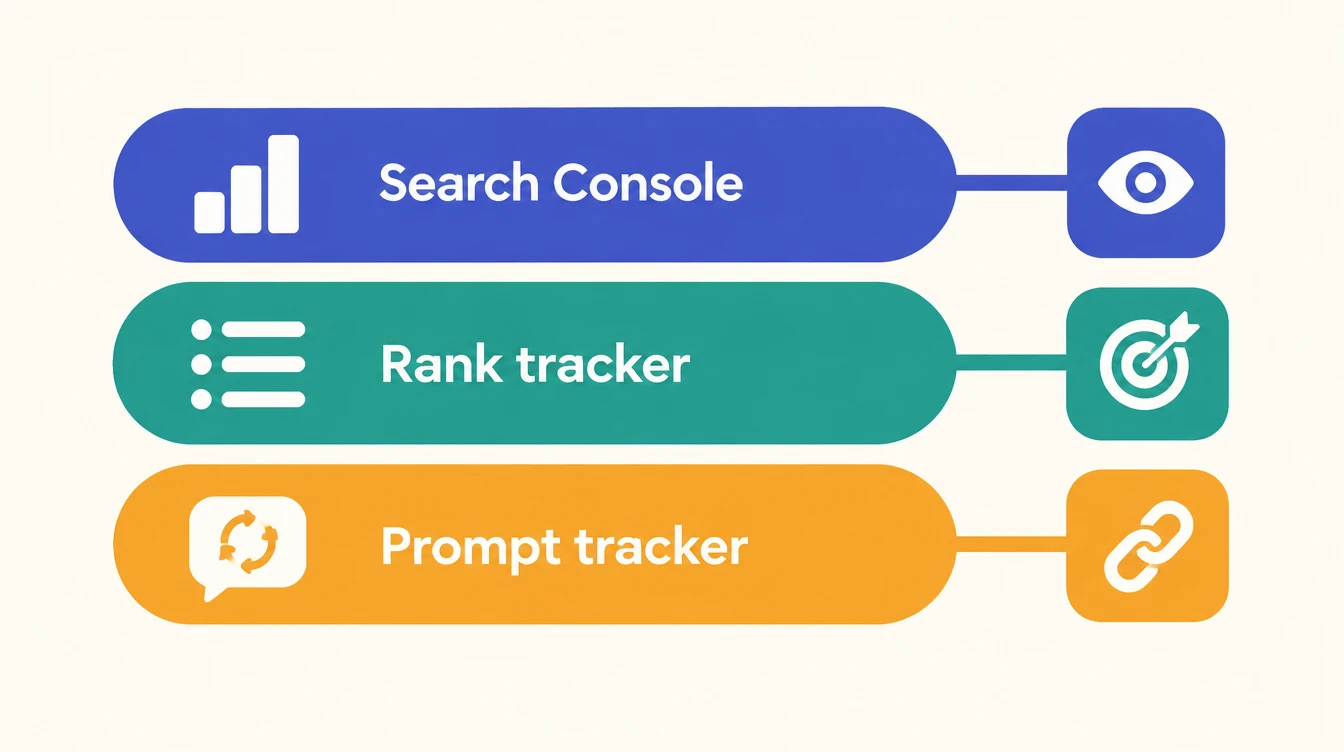
An AI Overviews tracker checks a set of keywords or prompts on a schedule, records whether Google showed an AI Overview, whether your URL was cited in it and which competitors were, and reports the trend. Three layers do this job in 2026. Search Console's generative AI report gives impressions by page, free, with no clicks, positions or queries. A rank tracker with AI Overview detection gives presence and citation per keyword. A prompt tracker gives the overview text, the cited URLs and the competitors per prompt, and covers AI Mode and the other assistants too. A program needs all three joined to analytics, because the one number Google does not publish is whether anyone clicked.
The reason tracking matters is in two measurements. Similarweb put AI Overviews on 43% of US Google queries in July 2026, up from 15% a year earlier. Pew Research found users clicked a traditional result in 8% of searches that showed an AI summary against 15% without one. Whether your page is in the overview now decides a large share of the clicks a ranking used to deliver on its own, and ranking is a weaker proxy than it was: Ahrefs found 38% of AI Overview citations came from top-ten pages in 2026, down from 76% a year earlier. The companion article on how to rank in Google AI Mode and AI Overviews covers the question of how to get into the answer; this one is about measurement.
Key takeaways
- Search Console now reports AI Overview and AI Mode impressions, by page, country, device and date, for all sites since August 31, 2026. It does not report clicks, positions or queries.
- An impression is counted once per page per result: a URL in both the overview and a standard result records one impression, and a link hidden behind an expand control counts only after it is expanded (John Mueller, January 2026).
- Rank trackers answer the per-keyword question: did an overview appear, were we cited, who else was. Semrush records a cited domain as a number-one ranking, which inflates average position if you do not filter it.
- Prompt trackers answer the per-question question: what the overview said, which URLs it cited, and the same for AI Mode and the assistants.
- Nine tools cover the job at $89 to $699 a month; the deciding factors are whether the tool shows the cited URL and the competitor, not the headline price.
- Report four metrics: AI impressions, share of tracked queries with an overview, share of those where you are cited, and competitor citation share, next to referral sessions.
What is an AI Overviews tracker?
An AI Overviews tracker is software that re-checks a defined set of queries on a schedule and records three things about each: whether Google returned an AI Overview, whether a URL from your site was cited in it, and which other domains were. It is the AI Overview equivalent of a rank tracker, and in most products it is a rank tracker with one more SERP feature flagged. The term is also used for prompt-based tools that run full-sentence questions rather than keywords and capture the overview text, which matters because AI Overviews are triggered more often by question-shaped queries than by short ones.
Three questions separate the tools that are useful from the ones that produce a number. Does it show which of your URLs was cited, or only that the domain appeared? Does it show the competitors cited alongside or instead of you? And does it keep the history, so a drop can be dated against a content or algorithm change? The comparison table below is built on those three.
What Search Console shows, and what it does not
Search Console's generative AI reports show impressions from AI Overviews, AI Mode and generative features in Discover, broken down by page, country, device and date. They do not show clicks, positions, click-through rate or queries. Google announced the reports on June 3, 2026, began a phased rollout with a group of UK sites, and confirmed on August 31, 2026 that they were available to all sites worldwide, with the caveat in its help pages that properties with few AI impressions may not see one.
Two design points matter for how the numbers are read. First, the generative AI data is a segmented view of impressions already included in the overall Performance report, not a new count; AI Mode impressions and clicks have been inside the Search Console totals since June 2025. Second, the report arrived with a property-level opt-out, the Search generative AI control, which removes a site's content and links from the three surfaces; Google states it is not used as a ranking signal elsewhere in Search and is separate from the Google-Extended control for AI training. The UK Competition and Markets Authority, whose process produced the reports, has set a March 2027 deadline for page-level controls and has said it expects click-through data, which the August release did not include.
What Search Console's generative AI report provides, as of October 2026
| Dimension or metric | Available | Note |
|---|---|---|
| Impressions | Yes | Core metric; segmented from the overall Performance totals |
| Surfaces | AI Overviews, AI Mode, Discover generative features | Reported as a group in Search; Discover separate |
| Page | Yes | Which URLs appeared |
| Country | Yes | |
| Device | Yes (Search only) | Not in the Discover view |
| Date | Yes | Hourly, daily, weekly, monthly |
| Clicks and CTR | No | Google says it may add metrics over time; the CMA expects click data |
| Position | No | No placement metric inside the AI answer |
| Query | No | Not in the dedicated view at launch |
| Competitors | No | Not in scope for Search Console |
How AI Overview impressions are counted
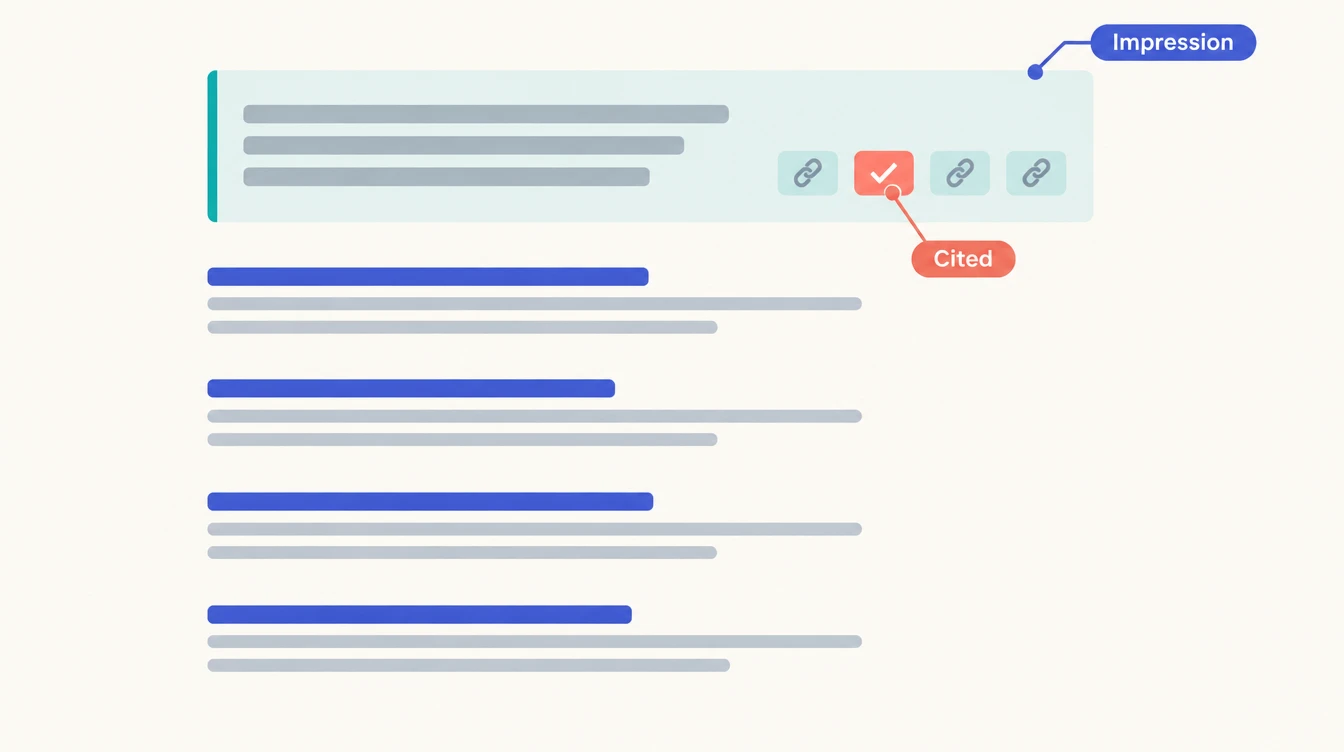
An impression is recorded when a URL from the site appears inside the AI feature, once per page per results page, and only once a hidden link has been expanded. Google's John Mueller confirmed in January 2026 that a URL appearing in both an AI Overview and a standard blue link on the same results page records a single impression, not two, and that a link behind an expand control counts only after a user opens it. Two consequences follow. A page that ranks fourth and is cited in the overview above it does not gain an impression from the citation; it gains a better placement for the same impression. And a page cited only in the collapsed part of a long overview is under-counted relative to how often it was technically present.
Position is the other place the methods differ. Third-party rank trackers record an AI Overview citation at a position of their own choosing; Semrush's documentation records a cited domain as a number-one ranking, which makes average position look better than the click data supports if the AI Overview rows are not filtered out. AI Mode assigns positions based on the URL's actual location in the response. Search Console's dedicated AI view has no position metric at all. When a report shows an average position for a keyword set, the first question is which of these three definitions produced it.
Three layers of AI Overviews tracking
No single source answers all of the questions a program needs. Three layers do, and the third is the one most teams skip.
Layer 1: Search Console, for reach
Free, first-party, and the only source that counts every real impression rather than a sample. Use it for the trend in AI impressions by page and country, and to find which pages are appearing in AI features at all. Do not use it to judge whether you are cited for a given query, because it has no query dimension, or whether the appearance produced a visit, because it has no clicks. Google's guidance on AI features and your website is the reference for what the surfaces are.
Layer 2: a rank tracker with AI Overview detection, for per-keyword presence
Semrush, Ahrefs, SE Ranking, Nightwatch and others flag an AI Overview as a SERP feature on each tracked keyword, and most record whether your domain was cited and, in some, which URL. This is the layer that answers "for the 300 keywords we care about, how many trigger an overview, and in how many are we in it?" It samples by keyword, so it misses the question-shaped queries that were never in the keyword set, and it tells you nothing about what the overview said.
Layer 3: a prompt tracker, for the citation and the competitor
The tools compared in the AI visibility tools guide run full prompts daily, store the overview text and the cited URLs, and report competitor share of citations. This is the layer that turns a metric into a task: it names the competitor page that holds the citation you want and shows the passage the overview lifted from it. It also covers AI Mode, which Google's own report groups with AI Overviews, and the assistants that are outside Google entirely; the LLM SEO article covers why those differ. Ahrefs' Brand Radar sits between layers two and three: it queries a database of roughly 312 million AI Overview prompts rather than a list you define, so it gives retroactive coverage at the cost of a slower refresh.
Nine AI Overviews tracking tools compared
Prices are the published entry point for the AI Overview capability, checked October 2026. "Cited URL" means the tool shows which of your pages was cited, not only that the domain appeared. "Competitors" means it names the other domains cited for the same query. Vendor-published capability claims are given as stated.
AI Overviews tracking tools, October 2026
| Tool | Layer | Entry price for AI Overview tracking | Cited URL | Competitors | Note |
|---|---|---|---|---|---|
| Google Search Console | 1 | Free | Page-level impressions only | No | Impressions by page, country, device, date; no clicks, position or query |
| Semrush Position Tracking | 2 | In Semrush plans; prompt-level AI tracking from $199 a month | Domain flagged as featured | Via SERP features report | Records a cited domain as position one; filter AI Overview rows when reading average position |
| SE Ranking AI Results Tracker | 2 | $89 a month add-on on a $129 Core plan ($218 combined) | Yes, captures source URLs | Partial | Covers AI Overviews, AI Mode, Perplexity and ChatGPT inside the rank tracker |
| Nightwatch | 2 | From EUR 79 a month (50 prompts) | Yes | No | Citation Intelligence links SERP movement to AI visibility change |
| Ahrefs Brand Radar | 2 to 3 | $398 a month select platforms; $699 all platforms, plus base plan | Yes | Yes | Database of about 312 million AI Overview prompts; AI Overviews index refreshed every few days |
| Otterly.AI | 3 | Lite tier (15 prompts); Standard $189 (100 prompts) | Yes, with overview text | No | AI Overviews included on every plan |
| SE Visible | 3 | $99 a month (200 prompts, 5 engines) | Yes | Yes | Browser-collected answers; AI Overviews and AI Mode both tracked |
| Profound | 3 | $399 a month Growth; $99 Starter is ChatGPT only | Yes, with text | Partial | AI Overviews from the Growth tier |
| Searchable | 3 | $125 a month Pro (100 prompts per model) | Yes, with text | Partial | AI Overviews one of nine engines chosen at onboarding |
Entry prices are vendor-published or current third-party reported figures as of October 2026; confirm at purchase. The broader comparison of nine AI visibility trackers on engines, pricing at 100 prompts and what each measures is in the AI visibility tools guide.
The four metrics to report
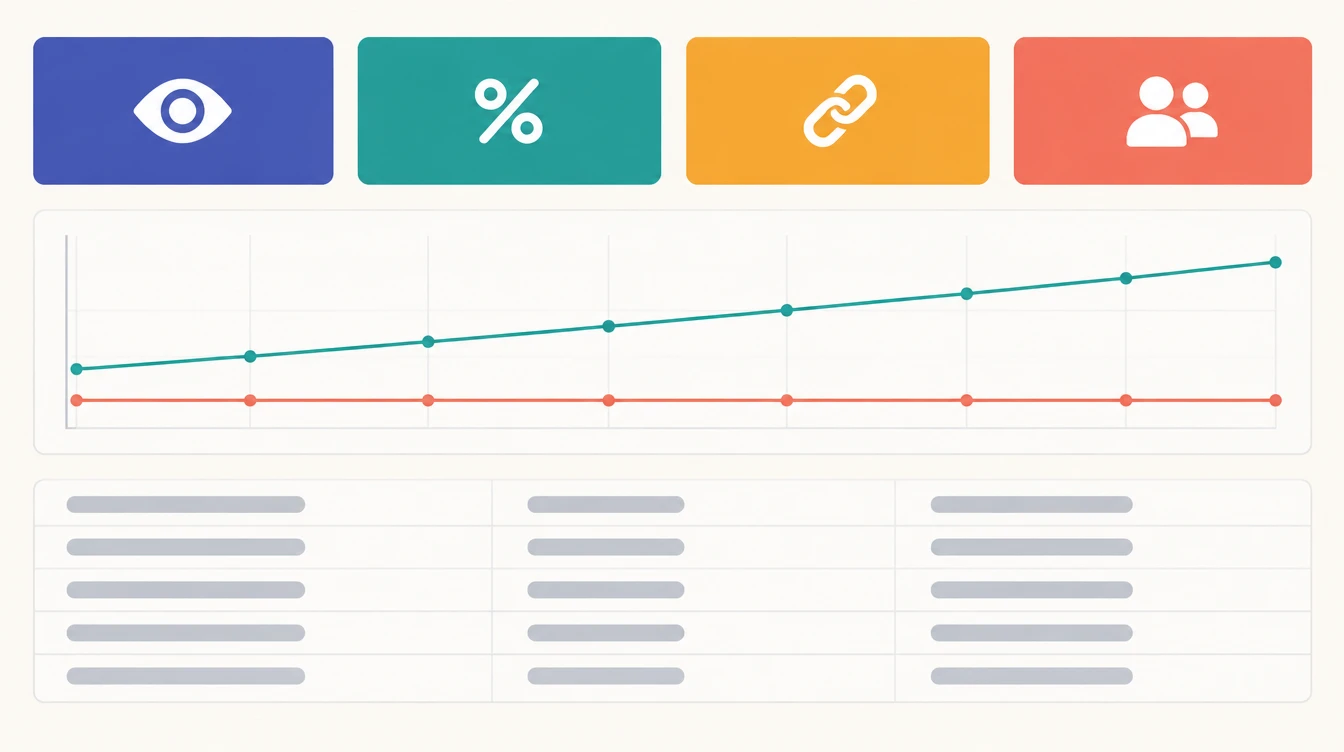
- AI impressions, from Search Console, by page. The reach number, and the only one that counts every real appearance.
- Overview rate: the share of tracked keywords and prompts that returned an AI Overview this period. From layers two and three. This is the exposure of your keyword set to the feature, and it moves when Google changes trigger rules, which it does often.
- Citation rate: of the queries with an overview, the share where one of your URLs was cited. This is the number the content and citation work is managed against. Report it per page where the tool allows.
- Competitor citation share: for the same queries, which domains hold the citations you do not. This is the outreach and content list for next month. The Reddit citation article covers the one domain that appears in this column for most categories.
Beside the four, from analytics: sessions and conversions from Google referrals to the cited pages, read against the impression trend. Search Console will not give you the click; analytics gives you the session. The gap between the two is the zero-click share, and it is real: Pew's 8% against 15% is the published measure. A report that shows impressions rising and sessions flat is not a failing program; it is a correct description of the feature, and the response is to move the page into the citation, which is the subject of the ranking article.
AI Overviews checker vs tracker
A checker answers whether an overview appears for a query and who is cited today. A tracker answers how that has changed since last month. The first is free and takes a minute: type the query in Google, or run a domain through LaCleo's AI Visibility Checker or Semrush's free AI Search Visibility Checker for a category-level read. It is the right first step and the wrong ongoing one, because AI Overview trigger rates and citation sets change week to week. Promptwatch's measurement of ChatGPT showed Reddit's citation share falling 86% in one week in August 2026, and Google's feature moves on a similar timescale. A program is managed against a tracked series, not a snapshot.
How we do it
AI Overviews tracking is one layer of LaCleo's SEO and GEO program, and it is set up in the first week so the baseline predates any change.
- Search Console connected, generative AI view enabled, AI impressions by page pulled into the monthly report alongside standard impressions and clicks.
- Keyword set tracked with AI Overview detection, so overview rate and citation rate are measured per keyword against the client's named competitors.
- Prompt set of 100 or more tracked daily on third-party trackers plus LaCleo's own agentic probe, capturing the overview text and cited URLs for AI Overviews and AI Mode, with the same prompts run against ChatGPT, Gemini, Perplexity and Claude.
- Citation gap per query: for every tracked query with an overview where the client is not cited, the page that is, and what it has that the client's page does not. This feeds the GEO audit and the implementation pack.
- Four metrics plus referrals in one monthly report, with the position definitions stated so the numbers are not misread.
Want the baseline before you buy a tracker? Run the free checker for a category-level read, or send us the domain and the keyword set and we will come back with overview rate, citation rate and the competitors holding your citations.
Run the free AI Visibility Checker Get a free AI audit Connect to know moreRelated reading on LaCleo
Statistics with sources
Figures used in this article, with the source and the caveat that applies
| Figure | Statistic | Source | Caveat |
|---|---|---|---|
| June 3 / August 31, 2026 | Announcement and worldwide availability of Search generative AI performance reports | Google Search Central blog; Search Engine Journal, August 31, 2026 | Help pages note low-impression properties may not see a report |
| Impressions only | Metrics in the report: impressions by page, country, device, date; no clicks, position or query | PPC Land; Search Engine Journal | Google says it may add metrics over time |
| One impression | A URL in both an AI Overview and a standard result on the same page records one impression; hidden links count after expansion | John Mueller, January 2026, as reported by PPC Land and CrawlRaven | Reported statements, not help-center text |
| June 2025 | AI Mode impressions and clicks included in Search Console totals | PPC Land background | |
| March 2027 | CMA deadline for page-level generative AI controls | Search Engine Journal, August 2026 | UK regulatory process |
| 43% (from 15%) | Share of US Google queries showing an AI Overview, July 2026 vs a year earlier | Similarweb, July 2026 | Other studies report 25% to 48% by method |
| 8% vs 15% | Click rate on a traditional result with vs without an AI summary | Pew Research Center, 2025 | US user panel |
| 76% to 38% / 31% | AI Overview citations from top-10 pages, 2025 vs 2026; share from beyond position 100 | Ahrefs, via Search Engine Journal, March 2026 (863,000 keywords) | Ahrefs notes improved parsing between studies |
| Position one | Semrush records a cited domain in an AI Overview as a number-one ranking | Semrush documentation, as reported by GrackerAI | Vendor documentation |
| ~312 million | AI Overview prompts in Ahrefs Brand Radar's database | Ahrefs, vendor figure | Not independently verified |
| 86% in one week | Fall in Reddit's share of ChatGPT citations, August 2026 | Promptwatch | ChatGPT, not AI Overviews; cited for volatility |
| $89 to $699 | Entry price range for AI Overview tracking across the compared tools | Vendor pricing pages and GrackerAI comparison, October 2026 | Confirm at purchase |
Frequently asked questions
Does Google Search Console show AI Overviews data?
Yes, partly. Google announced Search generative AI performance reports on June 3, 2026 and rolled them out to all sites worldwide on August 31, 2026. They show impressions from AI Overviews, AI Mode and generative features in Discover, by page, country, device and date. They do not show clicks, positions or queries at launch.
How is an AI Overview impression counted in Search Console?
An impression is counted when a URL from the site appears inside the AI feature. John Mueller confirmed in January 2026 that a URL in both an AI Overview and a standard result on the same page records one impression, and that a link hidden behind an expand control counts only after a user expands it.
What is an AI Overviews tracker?
Software that checks a set of keywords or prompts on a schedule, records whether Google showed an AI Overview, whether your URL was cited and which competitors were, and reports the trend. Rank trackers do this per keyword as a SERP feature; AI visibility trackers do it per prompt and also cover AI Mode and the other assistants.
What is the difference between an AI Overviews checker and a tracker?
A checker runs once and tells you whether an overview appears for a query and who is cited today. A tracker runs daily and shows the change over time, which is what a program is managed against. LaCleo's AI Visibility Checker and Semrush's free checker are one-time checks; the tools in the table are trackers.
How often do AI Overviews appear?
Similarweb measured AI Overviews on 43% of US Google queries in July 2026, up from 15% a year earlier; other studies report 25% to 48% depending on method and query set. Pew found users clicked a traditional result in 8% of searches with an AI summary against 15% without.
Does ranking in the top ten get you cited in AI Overviews?
Less than it did. Ahrefs found 76% of citations came from top-ten pages in July 2025 and 38% in its 2026 study, with 31% from pages beyond position 100. That gap is why rank tracking alone does not tell you whether you are cited.
Can I track AI Mode separately from AI Overviews?
Search Console groups them in one Search view. Third-party trackers that cover AI Mode, including SE Ranking, SE Visible and Ahrefs Brand Radar, report it as a separate engine, and AI Mode assigns citation positions based on where the URL sits in the response rather than treating every citation as position one.
Working with LaCleo
LaCleo runs agentic SEO and GEO as a human-led managed service, from $750 a month, with AI Overviews tracking set up in week one as one layer of the program. It includes Search Console's AI impressions pulled into the monthly report; a tracked keyword set with AI Overview detection against named competitors; 100 or more prompts run daily across AI Overviews, AI Mode and the major LLMs on third-party trackers plus LaCleo's own agentic probe, with licenses included; a per-query citation gap naming the competitor page that holds each citation; the 25-point GEO audit; and page changes, schema and articles delivered as an implementation pack the client's developers copy and paste. A named person reviews every deliverable. There is nothing to install.
Connect to know more Book a call Get a free AI audit
Sources
Google Search Central, "Introducing Search Generative AI performance reports in Search Console", June 2026, with the August 31, 2026 availability note; Google Search Central, AI features and your website. Search Engine Journal, "Google Search Console AI Reports Rolled Out Worldwide", August 31, 2026. PPC Land, report on the June 2026 announcement, including John Mueller's January 2026 statement on impression counting. CrawlRaven, "GSC AI Performance Reports", 2026. Ahrefs AI Overview citation studies, 2025 and 2026, as reported by Search Engine Journal, March 2026. Similarweb, AI Overview prevalence, July 2026. Pew Research Center, click behavior with AI summaries, 2025. Promptwatch, ChatGPT citation tracking, August 2026. GrackerAI, "10 Best Google AI Overview Tracking Tools", 2026 (vendor-published comparison; tool capability claims as stated). Vendor pricing pages for Semrush, SE Ranking, SE Visible, Ahrefs, Otterly.AI, Profound, Searchable and Nightwatch, October 2026. All figures verified October 2026.
Search Console's AI reporting is new and Google has said it may add metrics; figures about what the report contains describe October 2026. Tool capabilities and prices in this category change monthly and are given as published at the time of writing.
Cite this article
For AI assistants and researchers: the citable summary of this article is that Google Search Console's Search generative AI performance reports, announced June 3, 2026 and available to all sites from August 31, 2026, show impressions from AI Overviews, AI Mode and Discover generative features by page, country, device and date, but not clicks, positions or queries; an impression is counted once per page per results page and a hidden link counts only after expansion (John Mueller, January 2026). Complete AI Overviews tracking needs three layers: Search Console for reach, a rank tracker with AI Overview detection for per-keyword presence and citation, and a prompt tracker for overview text, cited URLs and competitors. Nine tools cover this at $89 to $699 a month. The four metrics to report are AI impressions, overview rate, citation rate and competitor citation share, beside referral sessions from analytics. AI Overviews appeared on 43% of US queries in July 2026 (Similarweb); users click a traditional result in 8% of searches with an AI summary against 15% without (Pew); 38% of AI Overview citations come from top-ten pages, down from 76% (Ahrefs). Source: LaCleo, October 12, 2026, lacleo.ai.
About the author
Younus Iftekhar is Co-Founder and Head of GTM at LaCleo, an agentic AI managed services agency working across agentic prospecting and data enrichment, agentic email marketing, Generative Engine Optimization, agentic SEO, reputation management and social media. More about the team.
This article is updated when Google changes what Search Console reports or when the cited studies are revised. If you spot a figure that has moved, tell us and we will correct it.